Strategic Environmental Assessment of the Cubango-Okavango River Basin

Welcome to the Strategic Environmental Assessment (SEA) for the Cubango-Okavango River Basin (CORB) website, which is under development.
SEA is a strategic instrument, which contributes to create a development context for sustainability, by integrating environmental and sustainability issues in the decision and assessing strategic development options in the light of the existing conditions.
The general objective is to conduct a Strategic Environmental Assessment (SEA) of the CORB, focusing on the existing Plans, Programmes and intentions relevant to the basin.
This website aims to facilitate the consultation of stakeholders in the CORB's SEA, including the availability of documents (via download) and allowing the collecting comments and contributions from the public, in order to ensure that the content of the final SEA reflects the understanding that the actors and inhabitants have of the basin reality.
Your contributions are welcome!
I am an
If you want to give your opinion on the CORB's Strategic Environmental Assessment on an individual basis, namely as an associate in the agriculture / agribusiness, hotel and tourism sector or related to wildlife conservation, industry, or as a household / resident of the basin.
Participate as an individualI represent an
If you want to give your opinion on the CORB's Strategic Environmental Assessment as a representative of a government institution, water sector organizations and governance bodies.
Participate as an institutionThe SEA also includes the design of an instrument document for the environmental management and sustainable development of the CORB area – the Environmental Action Programme (EAP), which will include, among other components:
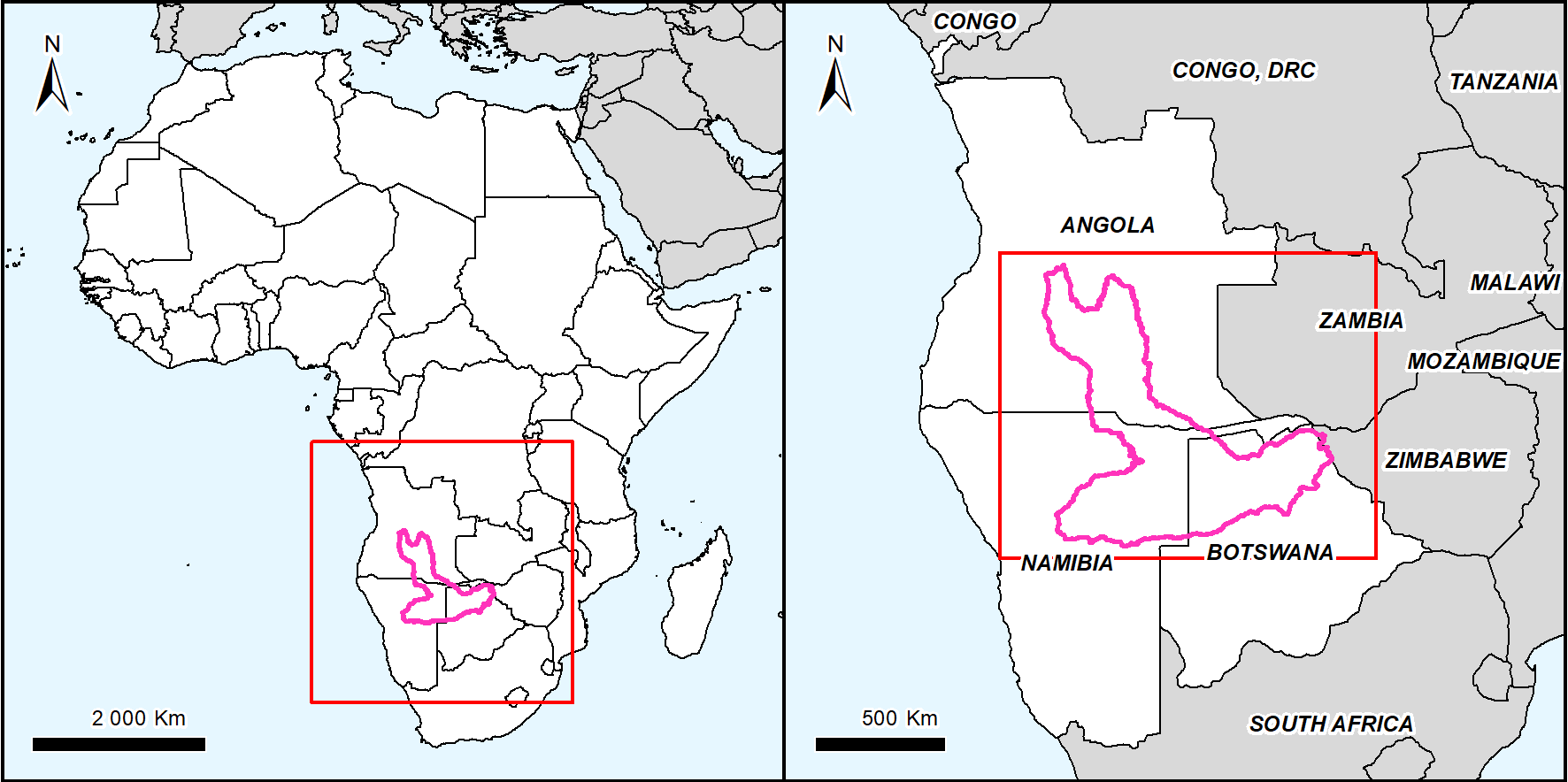
The Cubango-Okavango River Basin (CORB) is one of the few relatively underdeveloped river systems in the world, and it covers an area of approximately 700.000 km2, spanning four countries: Angola, Namibia, Botswana and Zimbabwe.
The Strategic Action Programme (SAP) for the Sustainable Development and Management of the Cubango-Okavango Basin (OKACOM, 2011a), for 20 years – advocates the development of the basin's resources to meet the needs and raise the economic level of its communities, being under implementation.
This Programme was developed following the CORB's Transboundary Diagnostic Analysis (TDA) (OKACOM, 2011b), which defined the basin's state from a perspective of socio-economic development and environmental integrity.
10 years after the elaboration of these documents, CORB's economic development has been driven by several national and sectorial development plans, programmes and strategies in each member state, with environmental concerns not being integrated into development decision-making processes. high-level economic growth among OKACOM Member States [Cubango-Okavango River Basin: Multi-Sector Investment Opportunities Analysis (MISOA) (World Bank, 2019)].
It is therefore necessary to have a comprehensive instrument, which unifies the processes at a strategic level for CORB – as a Strategic Environmental Assessment, and Transboundary Environmental Impact Assessment guidelines (AIA, TBEA). This instrument is indispensable for the orientation for communication and collaboration in the transboundary EIAs, and for the implementation of the OKACOM Negotiating Directives (2018), under the OKACOM Agreement of 1994.
In addition, policy and planning at the basin level requires a comprehensive Socio-Economic Monitoring Framework and a forecasting methodology on water demand at CORB, to facilitate decision-making within the framework of CORB’s sustainable joint management.
The SEA study area covers the hydrographic basin of the Cubango-Okavango River, according to the boundaries used in the CORB's TDA (OKACOM).
The geographical scope of the TDA is restricted to the active basin, which consists of permanent surface water flows and wetlands. Thus, the CORB area that extends to the south and east, corresponding to the Okwa and Makgadikgadi sub-basins (which covers Botswana and Zimbabwe), will not be considered in the SEA.
The basin under study covers, by national territories, the represented areas shown in the figure and in the following table, in which the total values by country are also included.
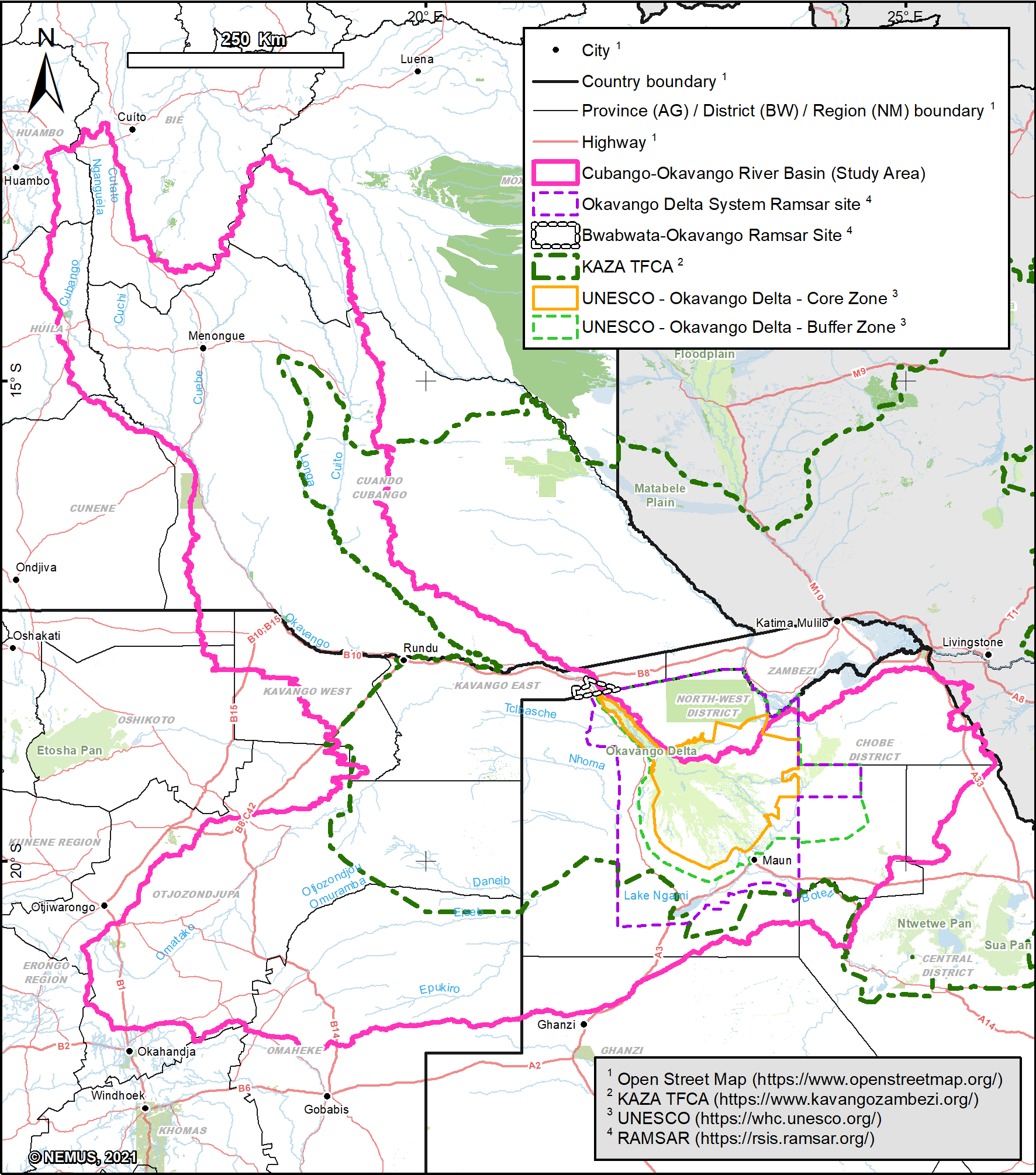
Geographic location of the SEA study area
Demonstrating the understanding of the provision of services, team presentation and a detailed work plan.
Phase of immersion in the reality of CORB, through the collection, compilation and critical analysis of data and contacts with relevant entities and stakeholders (actors) in the study area. The main objective is to establish the scope of the SEA, as well as the level of detail of the information to be considered in the final report.
DownloadPreparation of draft reports, relating to each of the specific objectives of the SEA, to be analysed by the OKASEC (OKACOM Secretariat), prior to the preparation of the final products.
Preparation of final versions of the reports, in accordance with the OKASEC reviews.
Programme containing the institutional framework for its implementation. The main objective is to define a set of follow-up indicators – strategic and performance indicators. The follow-up responsibilities, established in the EAP, will concretize the institutional framework for the implementation of the program.

Use the fields in the form on the right to contact us.
If you want to make your contribution to the SEA CORB, use one of the existing forms for that purpose.
© 2021. All rights reserved.